MLBB at the 2026 Asian Games: The Geometry of an 11-Team Draw, One Stakeless Match, and the Favourite's Quiet Risk
মূল উত্তর: ২০২৬ এশিয়ান Gamesে (আইচি-নাগোয়া, জাপান) MLBB প্রথমবার মেডেল ইভেন্ট হিসেবে যুক্ত হয়েছে; ১১টি জাতীয় দল চারটি গ্রুপে (৩/৩/৩/২) সিঙ্গেল রাউন্ড-রবিন খেলছে, নকআউট BO3 আর সোনার ম্যাচ BO7। ইরানের প্রত্যাহারের পরও বন্ধনী পুনর্গঠন করা হয়নি, তাই কম্বোডিয়া ও মঙ্গোলিয়া গ্রুপ ডি থেকে ফলাফল নির্বিশেষে কোয়ার্টারফাইনালে যাবে। মূল তথ্য: • ইভেন্ট: মোবাইল লেজেন্ডস: ব্যাং ব্যাং, ২০২৬ এশিয়ান Games, আইচি স্কাই এক্সপো, তোকোনামে, জাপান। • সময়সূচি: গ্রুপ পর্ব ২৯ সেপ্টেম্বর ২০২৬; কোয়ার্টার ও সেমিফাইনাল ৩০ সেপ্টেম্বর ২০২৬; সোনার ম্যাচ ১ অক্টোবর ২০২৬। • Format: ১১ দল, চার গ্রুপ, প্রতি গ্রুপ থেকে দুই দল নকআউটে; নকআউট BO3, ফাইনাল BO7। • ফেভারিট: ফিলিপাইন, কোর টিম লিকুইড PH; প্রতিবেদন অনুযায়ী সাতটির ছয়টি MLBB বিশ্বচ্যাম্পিয়নশিপ ফিলিপাইন দলের। • সম্প্রচার: MLBB-র নিজস্ব ইউটিউব, ফেসবুক ও টিকটক চ্যানেলে; কোনো হোস্ট ব্রডকাস্টার বা রাইটস মার্কেটপ্লেস নেই। সূত্র: Esports Insider-এর প্রতিবেদন "MLBB Asian Games 2026: Schedule and Standings"; প্রতিবেদনে প্রকাশের নির্দিষ্ট তারিখ উল্লেখ নেই, সূচি ও Formatের তথ্য | Cross-checked: cricsultan.com সম্পর্কিত প্রশ্নোত্তর: প্রশ্ন: এশিয়াড ২০২৬-এ MLBB-তে কতটি দল খেলছে? উত্তর: ১১টি জাতীয় দল, চারটি গ্রুপে (৩/৩/৩/২) সিঙ্গেল রাউন্ড-রবিন Formatে। প্রশ্ন: গ্রুপ ডি-তে কী ঘটছে? উত্তর: কম্বোডিয়া ও মঙ্গোলিয়া ফলাফল নির্বিশেষে নকআউটে যাচ্ছে, তাই ওই ম্যাচটি শুধু সিডিং নির্ধারণ করে। প্রশ্ন: সোনার ম্যাচ কবে এবং কোন Formatে? উত্তর: ১ অক্টোবর ২০২৬, স্থানীয় সময় দুপুর ১টা (UTC+8), BO7 Formatে।
On 29 September, at the Aichi Sky Expo in Tokoname, Japan, the group-stage schedule contained one fixture between Cambodia and Mongolia. Whatever the score, both teams advance. Nobody goes home for losing; nobody wins anything beyond seeding — the only thing that changes is which side of the bracket they land on in the quarterfinals. This is MLBB's first medal event at an Asian Games, and its group stage contains a match with no elimination consequence. During the summer of the 2026 World Cup, casting my first live tournament at Mymensingh Cyber Café, I mispronounced "Kai'Sa" as "Kaisa" and got laughed at, and kept going anyway. What I learned that day is clearer now — a tournament's story is not written on the scoreboard, it is written in the geometry of the draw. Every deep dive begins where the scoreboard stops explaining.
Esports was a demonstration event at the 2026 Asian Games and became a full medal discipline in 2026, per the Olympic Council of Asia. In Aichi-Nagoya 2026, MLBB enters the medal programme for the first time. Eleven national teams sit in four groups: Group A has Myanmar, Hong Kong and Uzbekistan; Group B has Malaysia, Indonesia and Saudi Arabia; Group C has the Philippines, Jordan and Kazakhstan; Group D has Cambodia and Mongolia. Single round-robin, top two per group advance. The schedule is brutally compressed: the entire group stage on 29 September, both quarterfinals and semifinals on 30 September, and the gold-medal match on 1 October at 1pm UTC+8. All knockouts are best-of-three; only the final is best-of-seven. Every match streams on MLBB's own YouTube, Facebook and TikTok channels. Before the tournament began, Iran withdrew.
The favourite is stated plainly: the Philippines, built on the core of Team Liquid PH, with Filipino teams reported to have won six of MLBB's seven world championships. Indonesia, Malaysia, Myanmar and Cambodia are listed as contenders.
Start with the arithmetic of the draw. Twelve teams would have produced four balanced three-team groups. Iran's withdrawal left eleven, and eleven cannot be split evenly four ways. The result is 3/3/3/2. Iran's withdrawal did not produce a redraw — the bracket was booked in advance, and the asymmetry was absorbed in the name of schedule protection. Groups A, B and C each eliminate one team; Group D eliminates nobody. Two different sets of conditions inside one tournament. The Group D fixture is therefore not about advancement at all, only seeding. Matches with no elimination stakes are historically the ones multi-sport integrity frameworks watch most closely — this is an observation about rule design, not a suspicion of Cambodia or Mongolia.
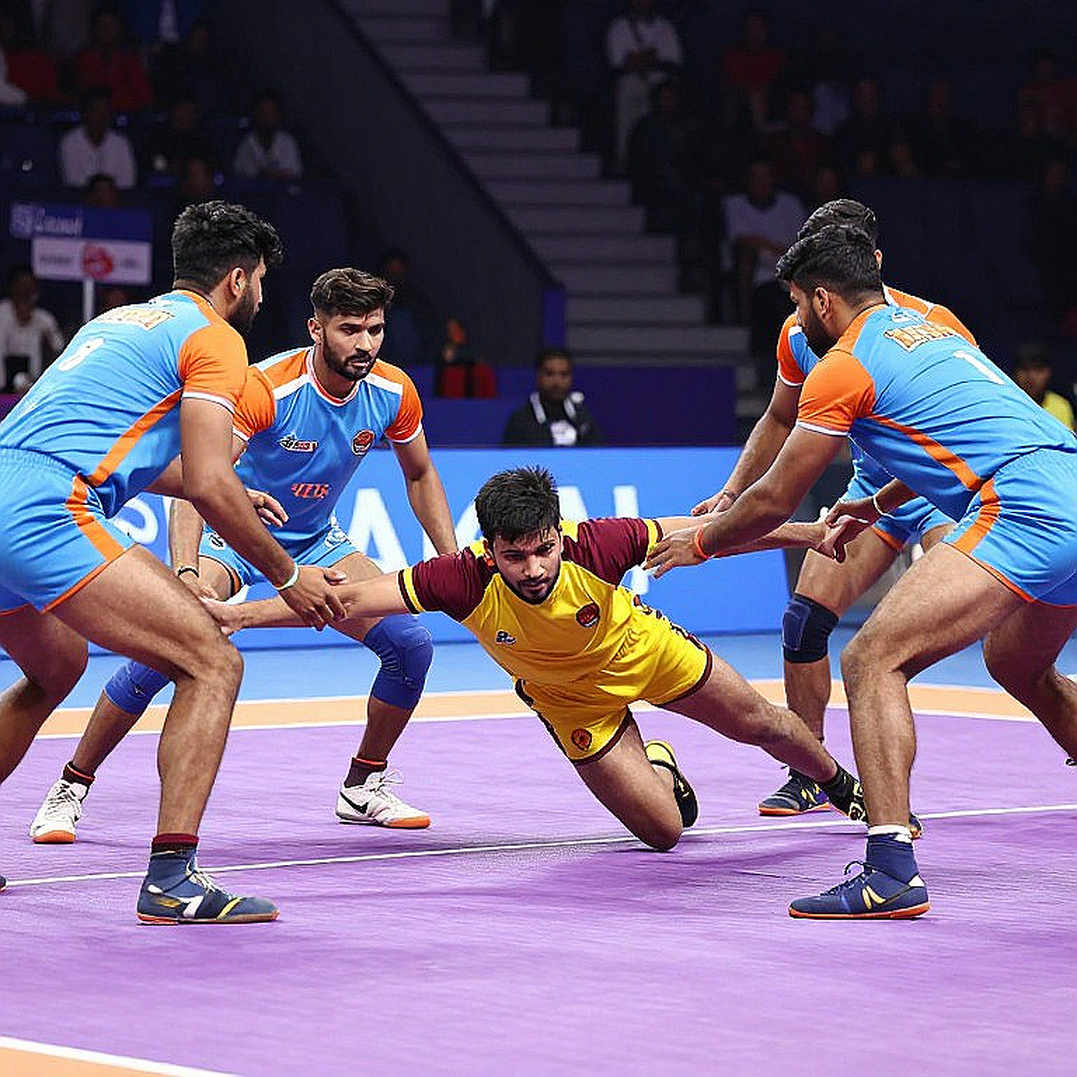
Next, the format, and it works against the favourite. The knockouts are single-elimination best-of-three. Six world titles out of seven buy zero structural protection in a best-of-three bracket. The best-of-seven final restores the edge of the deeper, better-prepared squad, but only if they survive the short-series gauntlet, where one bad draft or one server-side variance event can erase the tournament's headline story. The report contains not a single sentence about a patch or version; whether the event runs a frozen tournament build, or which hero pool is in play, is nowhere stated. Any draft-depth argument here would be invention. Seven years of watching matches taught me that marking the gap as a gap is better than filling it.
The schedule load is a competitive variable, not a footnote. Six best-of-three series on 30 September, then a best-of-seven the next day. A finalist could play up to nine games in two days. That load profile makes coaching depth, draft budgeting and between-series recovery decisive. The way gegenpressing turned mid-table football sides into athletic contests, this calendar pushes competitive MOBA the same direction: which team found the best pick matters less than whose hands and head survive two days.
Another structural layer is geography. Having combed through M-Series VODs alongside parallel World Cup narratives, the pattern repeats — MLBB's competitive economy is concentrated in Southeast Asia, and this 11-team field does not change that. No mainland China, no host Japan, no Vietnam, no Thailand. A medal is being awarded in a discipline whose talent base sits effectively in one region — the defining structural feature of MLBB's Asiad entry, and the least discussed. Saudi Arabia went out 0-2 in the group stage; Uzbekistan did the same. The state pouring money into the Esports World Cup saw its national MLBB team stop at the group stage. That is not failure, it is a transmission lag: capital builds infrastructure and events quickly, competitive depth in one specific title takes a generation.
Commercially, the most consequential fact is distribution. The entire medal event streams on the publisher's own channels — MLBB's official YouTube, Facebook and TikTok. No host broadcaster, no rights marketplace, no third-party platform deal. At an Olympic-movement event, mobile esports' distribution model operates entirely under its own control: the audience data is the publisher's, the ad revenue is the publisher's, and so are the replays and server logs. Commercial interest and technical oversight sit under one roof. The TikTok channel is not incidental — vertical short-form video matches the mobile MOBA audience, and at an Asiad it leaves behind a template other mobile titles can copy.
On club-core construction and reporting gaps. The Philippines' most concrete advantage is not the trophy count but the fact that its core belongs to one club, Team Liquid PH. Integration cost is near zero. Where a national team must fuse players from multiple clubs, chemistry becomes the largest variable in a short prep window — which makes the club-core model the reproducible template for the next cycle. As for the reporting itself: not one player is named, there is no roster, no rating, no head-to-head. The same article states Group C's status two different ways — matches incomplete in one place, the quarterfinal bracket set in another. The publisher self-discloses automated newsroom tooling. Standings from this source are unusable without verification, and building a story on half-true standings is a caster's worst trap.
Now the counter-argument against the prevailing expectation. The common framing runs: the gold belongs to Southeast Asia, there is nothing to lose; a Philippine exit would be a dramatic upset. In a best-of-three single-elimination bracket, the favourite going out is not an upset — it is the format's normal output. Call it an upset and the failure belongs to the coverage, not the format. Likewise, treating "the first MLBB gold" as proof of esports' global legitimisation is premature. China, Japan, Vietnam and Thailand are absent from the 11-team list; the medal's symbol is global, the competition's base is regional. In 2026, at fourteen, I wrote a twelve-line poem about Galio and titled it "The Unkillable Demon King." The Galio Poem was my first script; I just didn't know it. Back then Summoner's Rift felt like an epic. Today the same logic strikes from the other direction — a medal event becomes an epic in a live cast, while behind it sit publisher broadcast control, a stakeless group match, and a small eight-team bracket instead of twenty.
What to track going forward is not the champion's name. Whether the bronze mechanism is a shared award or a third-place match quietly dropped from the schedule. Whether the Philippines and Indonesia land in the same semifinal half — the deepest rivalry in this title lives on that axis, and the semifinal pairing sets the temperature of the whole final. And whether MLBB survives into the next Asiad cycle: if it does, 2026 is a beginning; if not, it is a one-off marker. In 2026, at seventeen, I cast the Lockdown League from an empty bedroom studio — thirty-two teams, no crowd, only Discord cheers, and Nirob of Sylhet Storms going 9/0/7 on Akali. If the frame is right, an empty room still roars. On the evening of 1 October I want to ask whose roar that hall in Nagoya carried — the scoreboard's, or the bracket's.