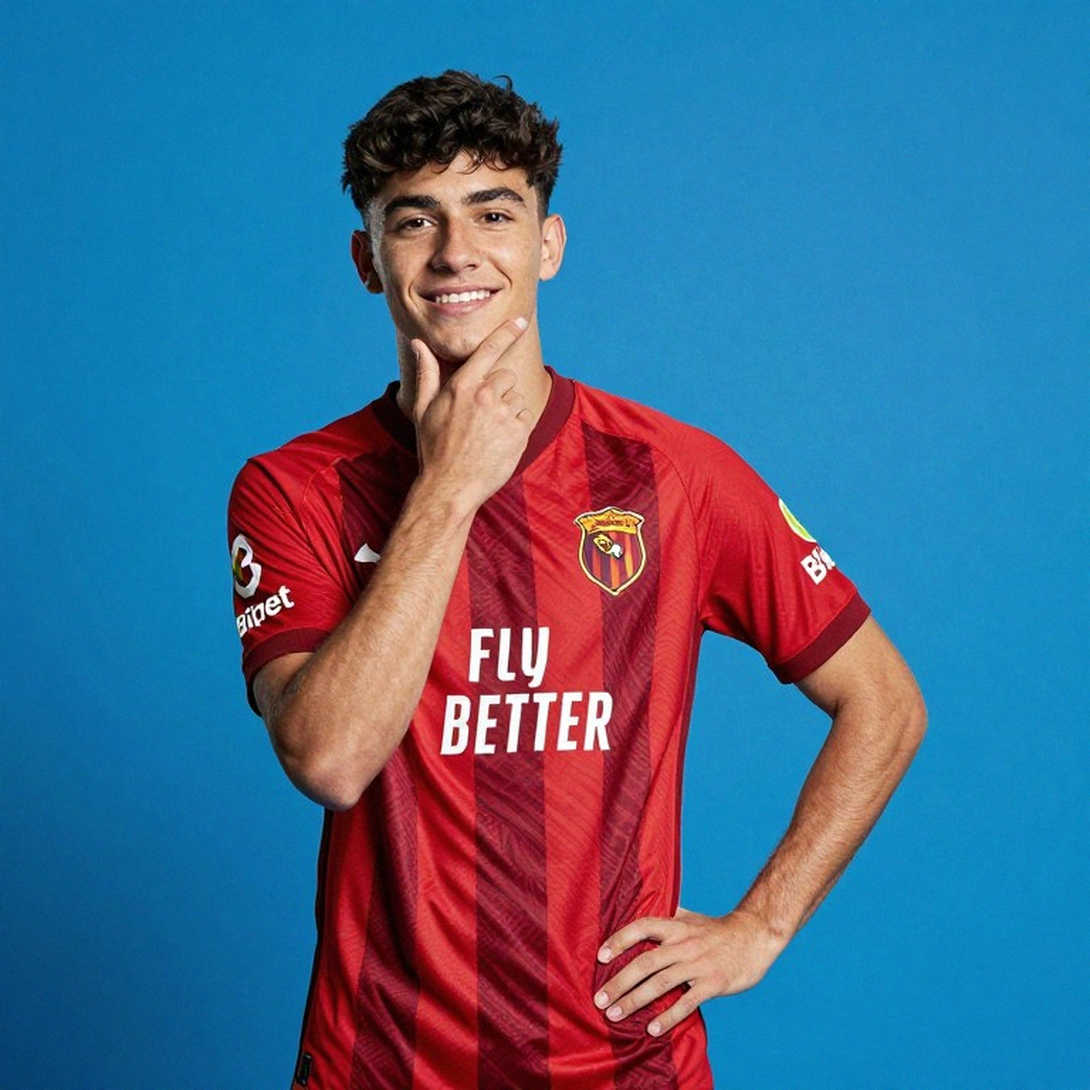
Bayern's Olise Contract: The Politics of a Deadline, the Arithmetic of Control, and Invisible Leverage
**মূল উত্তর:** বায়ার্ন মিউনিখ মাইকেল ওলিসের চুক্তি নবায়নের প্রস্তুতি নিচ্ছে। ২৪ বছর বয়সী ফরওয়ার্ডের বর্তমান চুক্তি ২০২৯ সালের জুন পর্যন্ত এবং রিলিজ ক্লজ নেই। ক্লাবের তিন শীর্ষ কর্তা প্রকাশ্যে নবায়নের ইচ্ছা জানিয়েছেন; স্পোর্টিং ডিরেক্টর ম্যাক্স এবার্ল আগামী গ্রীষ্মের মধ্যে স্পষ্টতা চেয়েছেন। রিয়াল মাদ্রিদের আগ্রহের খবর আছে, তবে আনুষ্ঠানিক প্রস্তাব আসেনি। **মূল তথ্য:** - মাইকেল ওলিস বায়ার্নে যোগ দেন ২০২৪ সালের জুলাইয়ে, ক্রিস্টাল প্যালেস থেকে। - বর্তমান চুক্তি ২০২৯ সালের জুন পর্যন্ত; কোনো রিলিজ ক্লজ নেই। - চলতি সময়ে ৭ ম্যাচে ৮ গোল ও ৪ অ্যাসিস্ট, মোট ১২ গোল-অবদান। - কার্ল-হাইন্ৎস রুমেনিগে তাঁকে অসাধারণ বলেছেন; ইয়ান-ক্রিস্টিয়ান ড্রেসেন প্রস্তাব না আসার কথা জানিয়েছেন। - ম্যাক্স এবার্ল চান আগামী গ্রীষ্মের মধ্যে ওলিসের ভবিষ্যৎ নিয়ে স্পষ্ট ধারণা। **সূত্র:** বায়ার্ন মিউনিখ ক্লাব-বিবৃতি ও চুক্তি-সংবাদ প্রতিবেদন (মূল প্রতিবেদনে প্রকাশের নির্দিষ্ট তারিখ উল্লেখ নেই) | Cross-checked: cricsultan.com **সংশ্লিষ্ট প্রশ্নোত্তর:** প্রশ্ন: ওলিসের চুক্তিতে রিলিজ ক্লজ থাকলে কী পরিবর্তন হতো? উত্তর: ক্রেতা ক্লাব নির্দিষ্ট অঙ্কে চুক্তি কিনতে পারত, ফলে বায়ার্নের নিয়ন্ত্রণ ও দর-কষাকষির সুবিধা কমে যেত। প্রশ্ন: রিয়াল মাদ্রিদ কি আনুষ্ঠানিক প্রস্তাব দিয়েছে? উত্তর: না — ড্রেসেনের বক্তব্য অনুযায়ী কোনো আনুষ্ঠানিক প্রস্তাব আসেনি, শুধু আগ্রহের খবর প্রকাশিত হয়েছে। প্রশ্ন: ৭ ম্যাচে ১২ গোল-অবদান কি টেকসই ধারা? উত্তর: না, এটি ছোট নমুনার উষ্ণ প্রবাহ; Averageের দিকে প্রত্যাবর্তন স্বাভাবিক, এবং প্রক্রিয়ার তথ্য (xG/xA) না থাকায় কারণ নির্ণয় করা যায় না।
Seven matches, twelve goal contributions. Age twenty-four. Contract to June 2029. No release clause.
With those four lines on the table, the rational move is to wait. Yet the sentence Sporting Director Max Eberl let out was not about celebration but about the calendar: Bayern wants a clear idea by next summer of where Michael Olise intends to play. When an institution still holding three seasons of contractual control asks for an answer within twelve months, the question is less about goals and more about the clock.
This is a contract report. The structure hiding inside it — how a club simultaneously prices its own value curve, its wage ladder and its future threats around a 24-year-old wide forward — is no less interesting than ninety minutes. Olise first entered my notebook not for a goal but for the corridor he leaves empty behind him when he steps inside from the right: a temporary trap for the opposing left-back, a permanent weapon for Bayern.
Context: who said what, and what still needs verifying
Bayern signed Olise from Crystal Palace in July 2026. Within the same window, three separate power centres spoke about one player. Supervisory board figure Karl-Heinz Rummenigge called him extraordinary — an assessment. CEO Jan-Christian Dreesen said he had seen the Real Madrid reports, but that no official offer had arrived — a denial. Eberl supplied a timeline — a summons.
Three sentences, three functions. In club communications, that alignment is rarely an accident.
A journalistic caution is needed here. The quotes are strong — three senior figures, on the record, by name. But the statistics placed alongside them — 8 goals and 4 assists in 7 matches; 50 goals and 58 assists in 114 career appearances — stand without attribution. They should be treated as claims awaiting verification, not as data. Club-adjacent numbers often arrive cleaner than they are contested.
There is also a small internal inconsistency. A July 2026 arrival, a contract to June 2029, and 114 appearances with 108 goal contributions in between make a tight timeline. My method is to keep the number in brackets rather than delete it: open it when verifiable evidence arrives.
Bayern are German champions. In Europe's food chain they sit at the top tier, not the apex — and this story is the evidence of that boundary, where Real Madrid functions less as a rival and more as gravity.
Core: what twelve contributions say, and what they do not
Twelve contributions in seven matches is 1.71 per game. For any wide forward that is an outlier rate, and outlier is the operative word. This is a hot streak on a small sample, not an established baseline. Sustaining it across a season is close to impossible; regression to the mean is the reasonable expectation.
The real problem sits elsewhere. The report gives output, not process. Eight goals, four assists — fine. From what quality of chance? What is the expected-goals figure? How often does he shoot from inside, cut the ball back, receive past the defensive line? What is the pressing intensity? Not one number is present.
That split is familiar to me. Football journalism favours metrics that are easy to collect. Distance, sprints, goals, assists package neatly as evidence of effort — and pointless running also produces pretty numbers. Without process data we cannot say whether this run is individual quality or a structure repeatedly delivering the ball to him in the right five metres. The difference is large: is the player winning on his own strength, or enjoying the system's advantage?
In 2026 I wrote a long thread breaking down Monaco's Ligue 1 title — 107 goals, 95 points, Kylian Mbappe's 15, Radamel Falcao's 21 — and modelled Leonardo Jardim's 4-4-2 mid-block. My error then was leaping from team output straight to individual valuation. I do not want that error repeated here. Output is a signal, not a cause.
The deadline: why now, with three years left
The club's control is near-perfect. The deal runs to 2029 and there is no release clause at all. The absence of a release clause means Bayern can turn down any bid; the buyer holds no key to the door. In that position, urgency should have no rational basis.
Yet a deadline exists. Why?
Contract economics has a simple rule: a player's sporting value peaks while he is scoring, and his bargaining power peaks in the final year of a deal. Those two points do not coincide. Bayern sit at the first while the second approaches. A pre-emptive renewal is timed precisely to land before that second point.

There is a second calculation the report omits. A transfer fee for a long-contract signing is normally spread across the deal's length. A new deal at top-band wages re-sets that accounting and simultaneously spends the agent's future leverage in advance. Renewing with three years left is, in effect, closing the fourth-year door early.
The risk lives here too. Rewarding one star at the top of the wage band teaches every other agent in the squad to read it as a precedent. If two more renewals tilt the same way within six months, it is reasonable to conclude the club paid not only for Olise, but for a new internal benchmark.
The Madrid line: a denial is itself a move
Real Madrid interest has been reported, but no formal offer has arrived. I read Dreesen's role systematically here.
In club interest, the sentence no offer has arrived is itself an action. Rumour markets only price in when the scent of an unfinished auction spreads. Publicly declaring the auction incomplete weakens the player side's receipt that someone wants me. The player side also needs pressure — which is why suspicion about where such rumours originate is one of football journalism's oldest habits. I am not assigning blame; I am noting detail. A report containing interest but no offer often carries both a resolution and a mystery in the same paragraph.
Rummenigge's praise is not mere courtesy either. When a supervisory board figure publicly calls a player extraordinary, the club places an obligation in front of itself. The reputational cost of not renewing rises. It is courtesy and summons in one sentence.
The corridor nobody watches
The half-space is not a position; it is a question the pitch asks. And the answer changes constantly, because the respondent is the opponent.
At Russia 2026, watching Didier Deschamps station Blaise Matuidi as a left shuttler against Argentina, my read was that Argentina's problem was not Lionel Messi's level but the fact that Messi's inside lane had already been occupied. Football's most important information often does not say where the ball can go; it says where it cannot.
In Olise's case the report gives us the opposite kind of information. We know where he scored; we do not know which corridors the rest of the team uses to reach him, and which are left empty. Twelve contributions in seven matches — if the rest of the squad's output sits in a narrow band, single-point dependency is forming in Bayern's attacking structure. That is not a catastrophe by itself; it is an indicator of how much the structure would break without one player. The report says nothing about squad depth. My confidence level here is medium, and I want another ten or twelve matches before drawing anything firm.
The translated role: same role, different pitch
Imported positional ideas — inverted winger, false nine, rest defence — behave differently in a dominant side than in a resource-poor one. At Bayern, Olise's licence to step inside is less his own choice than a by-product of team balance: when the right-back overlaps, the right half-space is vacated, and Olise fills it by moving in.
Where I work, with thin squads and monsoon pitches, the same role mutates — because the licence to come inside grows while the quality of delivery falls. That comparison is not regional colour; it is a measurement question. How much of a role's output belongs to the player, and how much to the pitch and the fixture calendar? I am keeping that question open while reading Olise's numbers.
Domestic competition: why retention is worth double
Bayern's model works on two levels — buying talent inside Germany to stay strong, buying proven quality outside to stay European. Olise is a successful example of the second: signed from Crystal Palace, quickly important.
Holding such an asset is more than a sum. It is part of the club's self-description: destination, not stepping stone. A club that can keep its best player gains leverage the next time it tries to sign someone else's. The capacity to retain is a parallel signal to the capacity to buy, and the market reads it.
The contrarian angle: the threat is internal, not Madrid
The conventional reading is that Bayern is tying down a star to hold off gravity. Convenient, clean, and probably incomplete.
My objection has two layers. The first is straightforward. The real leverage in this story sits not with the outside buyer but with the internal wage band. Moving a 24-year-old forward to top-band pay announces a new internal index. If the club cannot hold that line for two years, the renewal becomes a positional cost rather than protection. No outside club needs to spend a fee; the wage ladder can ripple inward on its own.
The second layer is speculative, and I will label it as such. Is Bayern now paying for a baseline that has not finished forming? Treating twelve contributions as durable without process data means pricing a hot streak. With three years left, there should be no fear; if the fear is real, it is either early cover or narrative management — both are possible, and the report does not distinguish them.
This is where I revise an earlier instinct of mine, and the revision runs in two layers — first the claim, then the reasoning that produced it. I once assumed almost automatically that a proactive deal signals strength. Now I would say a proactive deal can express two different states: strength, or a revised risk estimate. The difference shows up in the terms, which this report does not contain. So I will not lean on a thesis just yet.
There is a third trap, usually skipped. Publicising a contract deadline is itself a risk. Every week of that window will be filled by media with small questions. A data gap you admit once must be explained again — each time in a new version.
What to watch: three signals and one falsifier
Signal one — the first official announcement of renewal talks. If it arrives before next summer, my hesitation thesis is wrong and the process is simply routine.
Signal two — whether Real Madrid's interest converts into a formal bid. If it does not, and the next winter window passes, the story belongs to media circulation.
Signal three — whether another senior Bayern renewal lands within six months. If it does, assuming the wage ladder has already begun to move is the reasonable read.
I am pre-registering my falsifier so I cannot later hide the miss: if Bayern announces no progress by next summer, and simultaneously an injury or club-sourced wage friction surfaces, then this article's claim that control is so secure that pressure is absent will have been wrong — and I will print that in the same place.
I kept a notebook of empty corridors before I understood who was running them. The gaps now visible around Olise's contract — the wage figure, the process data, and his own behaviour over the next eleven months — are the real match. The ninety minutes are over; the clock game has started.