
The Position Japan Never Named: Inside Half, Pedri, and a Lost Generation
**মূল উত্তর** জাপানের সমস্যা জন্মগত নয়, পরিবেশগত — Coachরা ইনসাইড হাফ Roleটা চেনেন না, তাই উচ্চ-প্রযুক্তি, নিচু-গতির সিদ্ধান্ত-নির্ভর মিডফিল্ডারকে ডানা বা গভীর Roleয় বাদ দিয়ে বেছে নেওয়া হয়। রক্ষায় ৪-৩-৩ ও ৪-২-৩-১ একই ৪-৪-২ ব্লক; তফাত কেবল সামনের দুইজনে কে ঢোকে। **মূল তথ্য** - রক্ষায় ৪-৩-৩ ও ৪-২-৩-১ একই ৪-৪-২ ব্লকে নামে; পার্থক্য কেবল সামনের জোড়ায় কে যোগ দেয়। - ৪-২-৩-১-এ সামনের জোড়ায় ঢোকে টপ-শিতা; ৪-৩-৩-এ ঢোকে একজন ইনসাইড হাফ। - ইনসাইড হাফের রক্ষার দায়িত্ব তাই ভোলান্তে-সদৃশ, টপ-শিতার চেয়ে অনেক চওড়া। - পেদ্রি-ইনিয়েস্তার Profile: উচ্চ প্রযুক্তি, নিচু গতি ও শক্তি; মূলধন বোধ ও সিদ্ধান্ত। - জাপান কাতার ২০২২-এর আগে ৪-৩-৩, কাতারে ৩-৪-২-১, এরপর ডিফল্ট ৪-২-৩-১। - হাভিয়ের আগিরের আমলে কাগাওয়া ও এন্দো ইনসাইড হাফ খেলেছিলেন; এশিয়ান কাপের পর সেই পরীক্ষা অসমাপ্ত। **সূত্র** কেনজি নিশিবের বিশ্লেষণধর্মী Articles অবলম্বনে; মূল প্রকাশের নির্দিষ্ট তারিখ উপলভ্য সূত্রে উল্লেখ নেই। | Cross-checked: cricsultan.com **সম্ভাব্য ফলো-আপ প্রশ্ন** প্রশ্ন: জাপান জাতীয় দলের বর্তমান ডিফল্ট আকার কী? উত্তর: ৪-২-৩-১, যা ২০২২ সালের পর থেকে প্রধান আকার। প্রশ্ন: ইনসাইড হাফ আর টপ-শিতার মূল পার্থক্য কোথায়? উত্তর: আক্রমণে দুজন প্রায় অভিন্ন, রক্ষায় আলাদা — ইনসাইড হাফকে সামনের জোড়ায় ঢুকতে হয়। প্রশ্ন: এই সিদ্ধান্ত কতটা মজবুত? উত্তর: এটি পজিশনাল বিশ্লেষণভিত্তিক অনুমান; কোহোর্ট ডেটা বা এক্সজি সমর্থন উপলভ্য নয়, তাই দিকনির্দেশক হিসেবে পড়া উচিত।
A U-21 match at the Asian Games, three in the morning. Japan were playing a 4-3-3. I was sitting in a rented booth in Barcelona listening only to the sound — the wet tap of the ball returning off the grass, then the near-silence of a boy in the half-space turning his hips. He took the pass and did not turn back, did not turn square; he looked straight ahead, where nobody was yet. Two seconds later somebody arrived. Nobody kept the pass in the replay, and nothing on the scoreline recorded it.
The booth was rented, but the voice was not; that distinction became my career.
The question circling that night was not about trophies. Why can Japan not produce its own Pedri? Why does an Iniesta never emerge from that pipeline, when technique, agility and game intelligence are not the shortages in Japanese football?
Japanese analyst Kenji Nishibe's recent piece chases the answer. His claim is uncomfortably simple: the problem is environmental, not innate. And at the centre of that environment sits the coach's eye.
Context: 4-3-3, 3-4-2-1, and a decade lost in between
Japan's system history is itself a pendulum. Before Qatar 2026, Hajime Moriyasu's team ran a 4-3-3 — not as identity, as experiment. At Qatar it became a 3-4-2-1. Since then the default has been a 4-2-3-1, and that same shape is the native language of the J.League.
Earlier, under Javier Aguirre, a 4-3-3 briefly opened a door. Shinji Kagawa and Wataru Endo played as inside halves. Aguirre was moved on after the Asian Cup, and the experiment was left unfinished.
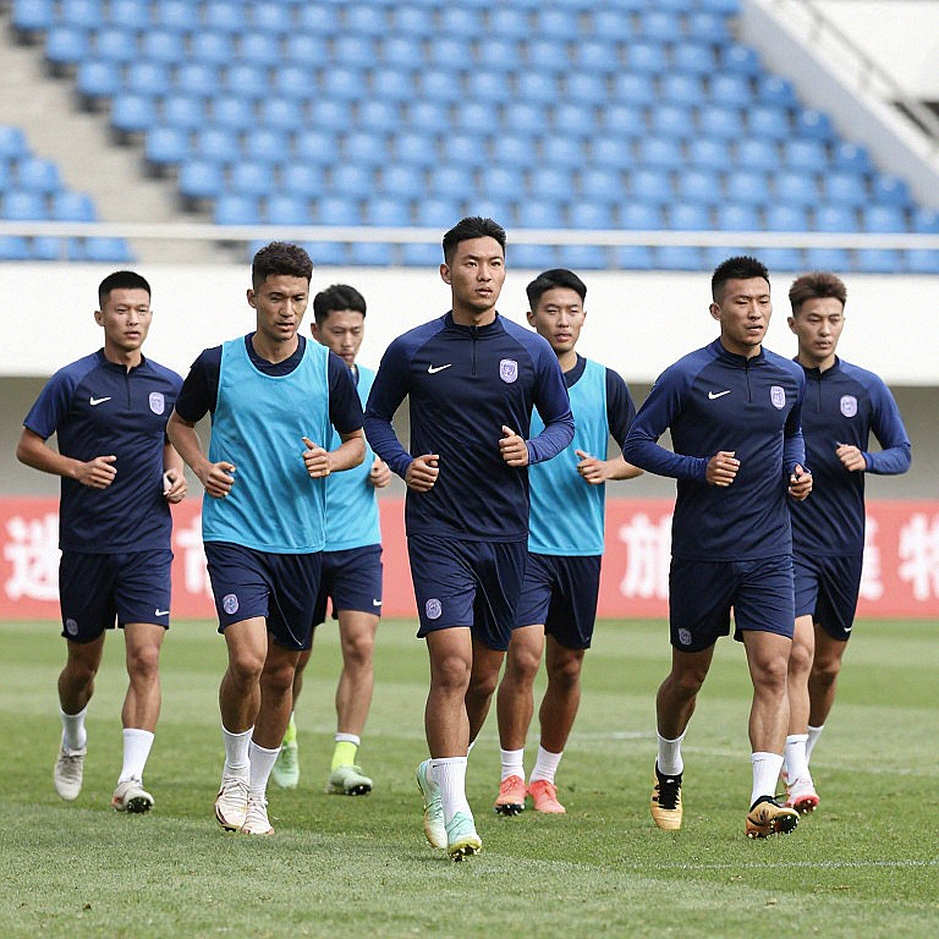
Spain is the mirror. Attacking shape 4-3-3, defensive shape 4-4-2, with the highest midfielder drifting into the half-space in possession to behave like an inside half. The joke is that the J.League's default 4-2-3-1 top-shita already does almost the same thing with the ball. The raw material is present; it simply is not recognised.
At U-21 level, Go Oiwa's 4-3-3 at the Asian Games is the test case worth watching — though Nishibe admits he does not know with what intent it was adopted. That admission is itself the signal: Japan's development philosophy is rarely written down.
Core: same shape, different brain
Here is Nishibe's most useful observation. Out of possession, the 4-3-3 and the 4-2-3-1 both collapse into the same 4-4-2 block. Two banks of four. On paper the difference almost vanishes.
The difference lives elsewhere. Which player steps into the front two when defending is the real ideology. In a 4-2-3-1 it is the top-shita, the most advanced attacker. In a 4-3-3 it is one of the two inside halves. So the inside half carries a far wider defensive mandate — a volante-adjacent second-line duty that the top-shita is never asked to perform.
In attack the two roles are near-twins; in defence they are different species. That is the subtle gap Nishibe calls surprisingly large, because the paper shape hides it.
And the Pedri-Iniesta profile? High technique, low speed, low power. Their real capital is not the body — it is cognition and judgment. When to turn, whom to face, how long to wait before releasing: the head answers those questions, not the feet.
Japan does not lack that profile, the author argues. It lacks the recognition of it. Coaching culture prioritises footwork and physical strength, and the brain usually ends up in the rejection pile. Esports taught me that reflexes are just emotion wearing a headset — easy to see, easy to sell. Cognition is invisible, so it is undervalued.
The result is a brutal selection process Nishibe names himself — shojokihō, choosing by elimination. The boy who could be Japan's best inside half today is turned away by three doors: not fast enough for the wing, not strong enough for the volante, not prolific enough for the top-shita. Three nos add up to a player who can be useful somewhere else — usually wide, usually half-finished.
Underneath sits an incentive structure nobody names out loud. A strong, quick, willing player is a safe investment for a coach judged on next season's results. A slow but cognitively elite midfielder is a risky pick, because his value appears only when the whole team is built to use it. Development rhetoric rewards bravery; development practice rewards safety.
In Moscow, 2026, I wrote that Akinfeev's gloves were a border wall made of reflex and prayer. That line travelled because we archive hands. We do not archive decisions. A goalkeeper's save is remembered by everyone; the centre-back who closed the passing line a second earlier is remembered by nobody. Japan's problem is an archiving problem.
The transmission chain is therefore direct: coach education, then role recognition, then player routing, then archetype output. Nishibe locates the weakness in the first link. The first byline arrived before the first truth did; I kept both in a rented booth — and Japanese football sits in that same booth today, where the name of the shape arrives before the name of the role.
Contrarian angle: the shape is not guilty, the eye is
First objection, blunt: writing 4-3-3 on the team sheet does not solve Japan's problem, because the problem is not the shape. The J.League top-shita in a 4-2-3-1 already performs the attacking half of the inside-half job — receiving in the half-space, half-turning, facing forward. The ideology is already in the building; nobody has named it as a role. Without a name there is no training; without training there are no players.
The second objection is methodological. Cognition and judgment is an elegant explanation and an unfalsifiable one. There is no record of how many inside-half minutes a Japanese teenager plays; no xG, no pressing-intensity numbers, no cohort data. Every claim comes from positional mechanics, not measurement. Recalling Kagawa and Endo as inside halves is author memory, not documented record. The memory is probably right; memory still cannot be the foundation of history.
Third, Japanese football is not a monolith. Sapporo, Hiroshima and Kobe coach with different philosophies; some demand possession, some demand reaction. A single verdict cuts half the picture away.
And there is a quieter possibility. The hunger for a Pedri archetype may be a proxy for a different anxiety — Japan's recurring struggle to break down organised low blocks. If that is the real wound, the answer is not a playmaker factory but a set of mechanisms: third-man runs, rest-defence cover, deliberate occupation of the half-space. A country can play excellent football without producing a Pedri, and calling that failure is a category error.
Takeaway
So what should actually be demanded? Probably not a Pedri factory. When small clubs develop half-finished products for giants, the question pushed to the back is the one that matters here: are we building the roles we need, or the roles the buying market wants? Europe buys Japanese midfielders to play wide or deep. If that demand template becomes the domestic standard, the inside-half profile will stay on the shortage list while sitting in the laboratory.
What to track: whether the U-21 4-3-3 survives, whether the JFA writes a role name into its coaching curriculum, and where J.League coaches place the young midfielder who already sees the pass two seconds early.
The image to keep: three in the morning, a boy in the half-space receiving with nobody ahead of him. In ten years we may know his name — if his seat has one too.