
Beyond the Kabaddi Points Table: The Story of Four Semi-Finalists at Asian Games 2026
**মূল উত্তর** এশিয়ান Games ২০২৬-এর পুরুষ কাবাডিতে চার সেমিফাইনালিস্ট নির্দিষ্ট: ভারত, চাইনিজ তাইপে, ইরান ও থাইল্যান্ড। চার দলেরই পদক নিশ্চিত। স্বর্ণপদক ম্যাচ ২৬ সেপ্টেম্বর ২০২৬-এ। গ্রুপ A-তে ভারত চার ম্যাচে চার জয়ে শীর্ষে; বাংলাদেশ দুই জয় নিয়েও স্কোর ডিফারেন্সে সেমিফাইনাল হাতছাড়া করেছে। **মূল তথ্য** - ইরান গ্রুপ B-তে চার ম্যাচে চার জয়; শেষ দিনে থাইল্যান্ডকে ৮৩-২৭ ও পাকিস্তানকে ৫১-৩০-এ হারিয়েছে। - থাইল্যান্ড তিন জয়ে গ্রুপ B-তে দ্বিতীয়; এশিয়ান Games কাবাডিতে এটি তাদের প্রথম পদক। - চাইনিজ তাইপে ও বাংলাদেশ দুটোই দুই জয়ে শেষ করেছে; স্কোর ডিফারেন্সে এগিয়ে সেমিফাইনালে চাইনিজ তাইপে। - কোরিয়া প্রজাতন্ত্র চার ম্যাচে চার হারে বিদায় নিয়েছে; পাকিস্তান প্রথমবার কাবাডিতে পদক ছাড়াই ফিরছে। - নেপাল শেষ দিনে মালয়েশিয়াকে ৭৩-৫২-এ হারিয়ে একমাত্র জয় পেয়েছে; মালয়েশিয়ার ঝুলিতে কোনো জয় নেই। **সূত্র উল্লেখ** মূল সূত্র: Khel Now কাবাডি ডেস্কের এশিয়ান Games ২০২৬ গ্রুপ পর্বের রিপোর্ট, গ্রুপ পর্ব সমাপ্তির দিনে প্রকাশিত | Cross-checked: cricsultan.com **সম্পর্কিত প্রশ্নোত্তর** প্রশ্ন: সেমিফাইনালে কোন চার দল খেলবে? উত্তর: ভারত, চাইনিজ তাইপে, ইরান ও থাইল্যান্ড — চার দলেরই পদক নিশ্চিত। প্রশ্ন: বাংলাদেশ দুই জয় পেয়েও কেন বাদ পড়ল? উত্তর: চাইনিজ তাইপে ও জাপানের সঙ্গে জয় সমান থাকলেও স্কোর ডিফারেন্সে পিছিয়ে পড়ায় বাংলাদেশ বিদায় নেয়। প্রশ্ন: থাইল্যান্ডের প্রথম পদকের তাৎপর্য কী? উত্তর: এটি থাইল্যান্ডের কাবাডিতে প্রথম এশিয়ান Games পদক, যা দেশটির ক্রীড়া বিনিয়োগ ও দলগত গভীরতায় দীর্ঘমেয়াদি প্রভাব ফেলতে পারে।
After the group stage, the top line of the kabaddi points table reads simply: India, four matches, four wins. The complication begins in the middle of the table. Bangladesh won two of four. Chinese Taipei also won two. Hosts Japan also won two. Three teams, identical wins, notional points, and only one semi-final ticket — and it went to Chinese Taipei. Bangladesh's exit was written in the narrow margin of score difference. In kabaddi, that blade is invisible during a match; you only see it in the ledger, after the whistle, when line-ups and raid plans lie scattered on an empty mat.
The four semi-finalists are now fixed: India, Chinese Taipei, Iran, Thailand. All four have secured a medal. The men's gold medal match is on September 26, 2026. Five matches on the final day of the group stage reshaped the table, and one of them spoke loudest — Iran beating Thailand 83-27.
On host soil in Japan, this kabaddi event stands at a turning point. In Group A, India top the table with four wins from four. Their balance between raiding and defence is so stable that opponents find very little room to change their plans. Second is Chinese Taipei, with a second consecutive kabaddi medal at an Asian Games and two wins from four. Third is Bangladesh, two wins. Fourth is hosts Japan, also two wins, edged out only on score difference. Bottom is the Republic of Korea, four losses from four.
In Group B, Iran top the standings as expected with four wins from four. Thailand are second with three wins from four, and their first ever medal in Asian Games kabaddi. Pakistan finished third and went out — the first time they will return home from an Asian Games without a kabaddi medal. Nepal are fourth with a single win, taken on the final day of the league stage, beating Malaysia 73-52. Malaysia sit bottom, without a win.
The rest of the final day told the same structural story. Japan beat Korea 62-35. India beat Chinese Taipei 37-21, but Chinese Taipei kept the margin tight enough — and that margin is exactly what carried them into the semi-finals. In the evening session Nepal beat Malaysia 73-52, and Iran beat Pakistan 51-30.
I have watched kabaddi for 32 years. After every group stage, I do one thing: I reconcile the table by hand and look for where the arithmetic does not add up. This time, what surfaced is not written plainly in the standings.
There was effectively no gap between second and fourth in Group A. Apart from India, the other four teams were arranged around a single equation. Each of them beat Korea. Chinese Taipei, Bangladesh and Japan then formed a closed circle among themselves — three matches, three different winners. In statistical terms, a perfect triangle settled into Group A, with all three teams finishing two-and-two. What decided who climbed was not the number of wins but the manner of defeats. This is where the score-difference rule bites. It does not ask how many you won; it asks how heavily you won and how much damage you contained in losing. From the two ends of the same calculation came one team's exit and another's guaranteed medal.
The Iran-Thailand match therefore deserves separate attention. 83-27 means more than two points per minute across forty minutes. That tempo does not come easily in kabaddi. It is bigger than one raider's aggression — it is the speed of transition, how quickly a team shifts from raid to defence and back onto the raid line. Thailand could not match that rhythm, and in kabaddi, once rhythm breaks, the scoreboard collapses fast.
That heavy margin, however, cannot be used to measure Thailand's progress. Their three wins in Group B all came against Pakistan, Nepal and Malaysia — within their own tier, they did what was expected. The real test of climbing the ladder came against Iran, and there the gap was exposed. For a coach, this 83-27 is a checklist, not a humiliation. Where the defensive line breaks, which cover moves first on a particular raid — those answers have to be pulled from the tape of this match.
India's route is the opposite. Against Chinese Taipei, 37-21 — 58 points in total, roughly half of Iran's match. India played slowly, patiently, with risk stripped out of their do-or-die raids. Across four wins, one thing stands out: India's scoreline never exploded. They win by holding a margin, and in knockout kabaddi that is the most valuable trait there is. Iran are playing at high temperature; India are playing in control. Two models, two roads, and if they meet in the final, that will be the tournament's real examination.
Japan's 62-35 win over Korea adds another data point. The hosts won two matches, their tactical understanding of kabaddi is visibly better, and they still go home fourth. Korea, a familiar name on the kabaddi map, ended with four losses from four. One team's rise and another's quiet slide happened inside the same four days. Anyone who files Korea's tournament away as a merely weak campaign will be pushing them further back for many more years.
Pakistan's exit deserves the same attention. They won two matches in Group B and still left without a medal, because those wins came against Nepal and Malaysia while they lost to Iran and Thailand. Kabaddi's reality is harsh: beating the teams below keeps you alive, but medals are won by beating the teams above. Nepal's single victory and Malaysia's zero are the true picture of the base of the pyramid, where every kabaddi nation waits a generation to climb one step.
I also keep a separate account of the spectators. I counted the women in the stands before I counted the points. Women in the gallery at a men's kabaddi match, the queue at the ticket window, families arriving together — none of this shows up in a statistical sheet, yet it is exactly what tells you how far the sport has entered society. Without those numbers, raids and points only give us half the story.
The coverage side is familiar ground for me. The pitch was there before the coverage was; I just brought the phone. From Rangpur I once streamed matches on a borrowed handset and a tripod, because cameras were sent for men's events while reporters were not even sought for women's events. A borrowed phone taught me that access is a reporting tool, not a luxury. Kabaddi is now broadcast on the Asian Games stage, but the question stays the same: who is watching, and how many are paying at the gate.
In June 2026 in Kuala Lumpur, the Women's Asia Cup cricket final was on while the Russia World Cup occupied every other television in the room; that day in Kuala Lumpur, the World Cup ran behind us like a second heartbeat. The picture in kabaddi is the same. Thailand's first medal will be written into the history books, but how much of it reached a broadcast, how many people watched — those answers tend to stay blank. A place on the international calendar and genuine coverage are two different things.
The contrary point is this: group-stage scorelines are not a measure of strength; they are a measure of the schedule. 83-27, 73-52, 62-35 — those heavy defeats are less evidence of one team's brilliance than proof that two different tiers landed in the same group. Thailand that collapsed in front of Iran is the same Thailand that won three matches in its own tier and took a first medal. Two truths, both true. An analyst who reads only the heavy margins and writes Thailand off as weak will miss what Thailand actually achieved in this tournament.
A second contrarian observation concerns Group A. The same calculation that shut Bangladesh's semi-final door confirmed a second consecutive medal for Chinese Taipei. The rule wronged nobody. It simply stated that in kabaddi, big wins and narrow losses are both components of skill. A team that loses by a wide margin carries the responsibility for its own exit. Here a gap in federation and coaching planning becomes clear: score difference in the group stage can be planned for in advance, and in Bangladesh's case it was not.
A third point nobody is making: the biggest story of the group stage is not the favourites' 4-0 records. It is Korea's zero wins, Pakistan's medalless return, Japan's fourth place after four years of squad building, and Nepal's fight on the final day. Consistency at the top is expected; instability at the base is what shows where the sport's real geography is shifting. If Korea's fall and Japan's rise belong to the same equation, then in the next cycle the India-Iran rivalry will not remain a two-party affair.
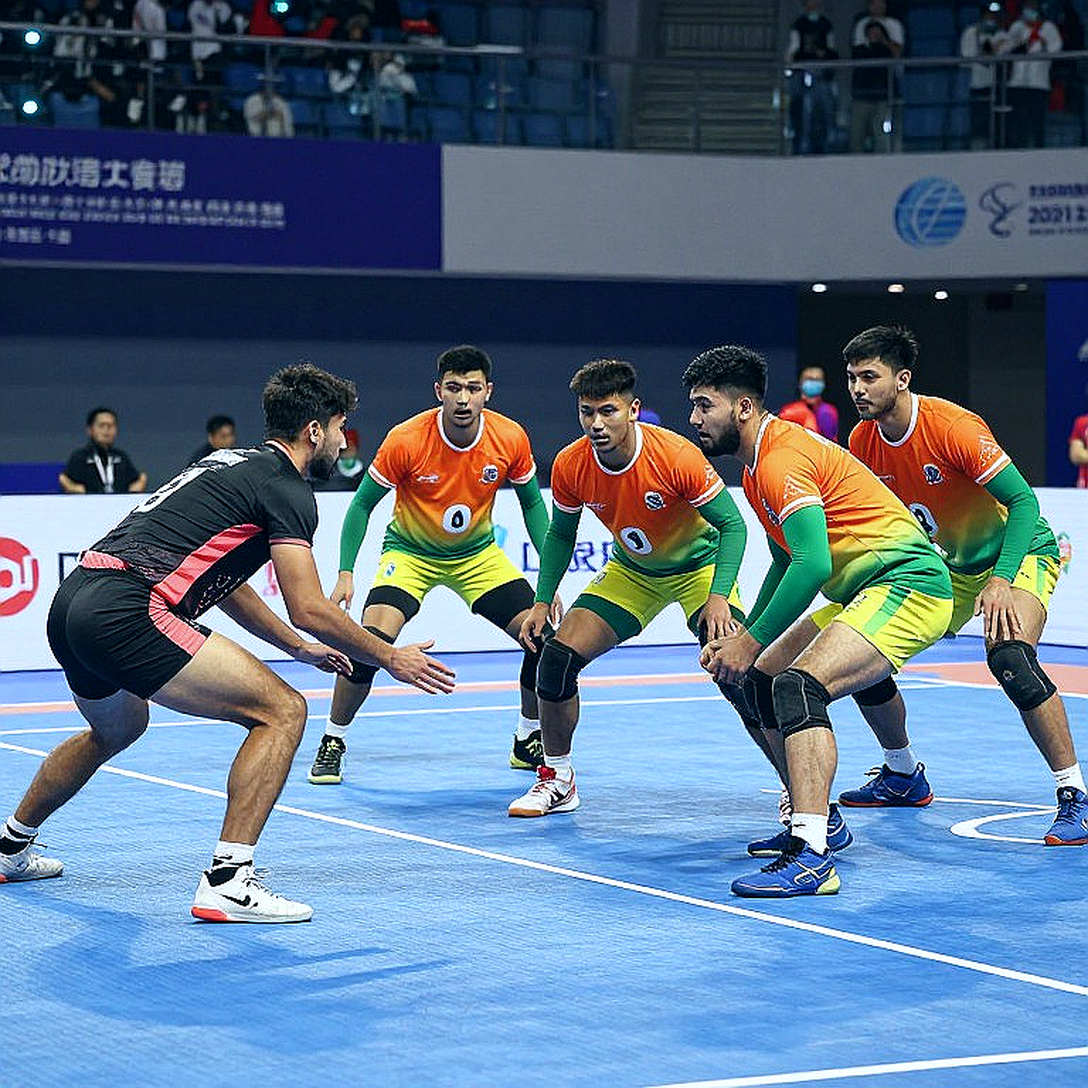
One question still burns. In Group A, three teams finished with identical records behind India, which means the gap between second and fourth in Asian kabaddi right now is one or two scores wide. Japan will get more investment as hosts, Chinese Taipei have medalled twice running, and Bangladesh keep arriving at the semi-final door and turning back. If one of those three beats India in a semi-final at the next edition, I will not be surprised. And if that happens, the final of September 26, 2026 will have to be rewritten from scratch.