
The Knife of Score Difference: Why Bangladesh Missed the Asian Games 2026 Kabaddi Semi-finals
মূল উত্তর: এশিয়ান Games ২০২৬ পুরুষ কাবাডির চার সেমিফাইনালিস্ট ভারত, চাইনিজ তাইপেই, ইরান ও থাইল্যান্ড; চার দলের মেডেল নিশ্চিত এবং গোল্ড মেডেল ম্যাচ ২৬ সেপ্টেম্বর, ২০২৬। বাংলাদেশ ও জাপান দুই জয়ে স্কোর ডিফারেন্সে বাদ পড়ে, পাকিস্তান প্রথমবার মেডেল ছাড়া বিদায় নেয়। মূল তথ্য: • গ্রুপ A-তে ভারত ৪ ম্যাচে ৪ জয়ে শীর্ষে; দুই জয়ের তিন দলের লড়াইয়ে স্কোর ডিফারেন্সে চাইনিজ তাইপেই সেমিফাইনালে যায়। • গ্রুপ B-তে ইরান ৪-০; থাইল্যান্ড ৩ জয়ে দ্বিতীয় হয়ে এশিয়ান Games কাবাডিতে দেশের প্রথম মেডেল নিশ্চিত করে। • শক্তিশালী স্কোরলাইন: ইরান ৮৩-২৭ থাইল্যান্ড, জাপান ৬২-৩৫ কোরিয়া, ভারত ৩৭-২১ চাইনিজ তাইপেই, নেপাল ৭৩-৫২ মালয়েশিয়া। • পাকিস্তান গ্রুপ B-তে তৃতীয় হয়ে বাদ পড়ে; এশিয়ান Games কাবাডিতে প্রথমবার তারা মেডেল ছাড়া ফেরে। • কোরিয়া রিপাবলিক ও মালয়েশিয়া পুরো ইভেন্টে একটি ম্যাচও জেতেনি। সূত্র: Khel Now, এশিয়ান Games ২০২৬ কাবাডি গ্রুপ পর্বের রিপোর্ট; গোল্ড মেডেল ম্যাচ ২৬ সেপ্টেম্বর, ২০২৬ | Cross-checked: cricsultan.com সম্পর্কিত প্রশ্নোত্তর: প্রশ্ন: এশিয়ান Games ২০২৬ কাবাডির সেমিফাইনাল কবে? উত্তর: সেমিফাইনাল গ্রুপ পর্বের পরপর অনুষ্ঠিত হবে এবং গোল্ড মেডেল ম্যাচ নির্ধারিত ২৬ সেপ্টেম্বর, ২০২৬। প্রশ্ন: বাংলাদেশ কেন সেমিফাইনালে যেতে পারেনি? উত্তর: বাংলাদেশের দুই জয় ছিল, চাইনিজ তাইপেইরও দুই জয়; স্কোর ডিফারেন্সে পিছিয়ে পড়ায় তারা টেবিলের তৃতীয় স্থানে থেকে বাদ পড়ে। প্রশ্ন: পাকিস্তানের এশিয়ান Games ২০২৬ কাবাডি অভিযান কেমন ছিল? উত্তর: গ্রুপ B-তে তৃতীয় হয়ে বাদ পড়ায় এশিয়ান Games কাবাডির ইতিহাসে প্রথমবার পাকিস্তান কোনো মেডেল ছাড়াই দেশে ফিরছে।
The final whistle had gone and Bangladesh's defenders were still looking at the stands. They had not lost on the mat; they had lost in the ledger. Four matches, two wins — exactly like hosts Japan, exactly like Chinese Taipei. Inside three teams on two wins sat one semi-final chair, and score difference decided who sat in it.

The group stage of men's kabaddi at the Asian Games 2026 is done. The four semi-finalists are India, Chinese Taipei, Iran and Thailand, all four with a medal secured and the gold medal match set for September 26. The list is clean. The rule that produced the list is not.
I have spent nine years with kabaddi and football scorecards open in front of me — scraping match data, logging raid outcomes, keeping notes on tackle recovery rates from a desk in Dhaka. I watched all six matches of the final league day. What stayed with me was how far the scoreboard drifted from the actual contest.
Group A ended with India on four wins from four and still the clearest gold favourite. Chinese Taipei took second with two wins and secured a second consecutive kabaddi medal at the Asian Games. Bangladesh finished third, also with two wins, missing the semi-final by a narrow margin on score difference. Japan finished fourth, also on two wins, and the hosts played a brand of kabaddi that may push them into the top tier within a few years. At the bottom sat the Republic of Korea, four matches, four defeats.
Group B ran to expectation at the top, where Iran went 4-0 like India. Thailand took second with three wins in four and a first-ever kabaddi medal at the Asian Games. Pakistan finished third and went home without a medal for the first time in the sport's Asian Games history. Nepal were fourth with a single win, claimed on the last day of the league stage. Malaysia finished bottom without a win.
Now read the day four scorelines slowly: Iran 83-27 Thailand, Iran 51-30 Pakistan, Nepal 73-52 Malaysia, Japan 62-35 Korea, India 37-21 Chinese Taipei.
Four of those five matches were won by margins far beyond two digits. The only close fixture involved a team that qualified anyway. Qualification was not settled by who beat whom, but by how hard teams won and how hard they lost.
Score difference does not measure who advances; it measures who wins loudest. In a 40-minute kabaddi match a raider has one line to attack and a defence has seven bodies to hold. A side that manages tempo — slower raids, deeper defensive sets, one point at a time — lives in 35-30 territory. A side that plays permanent all-out lives in 50-20 and 20-50 territory. A points-difference tiebreaker treats those two models as equivalents. They are not.
Iran's 56-point win over Thailand and their 27-point win over Korea came from two different strategies colliding, not from a gap in quality the table can express. Thailand's three wins in four were real; their only defeat came against Iran and it detonated their differential. One match, one number, one ranking.
Thailand's first medal says kabaddi's map is widening, while the tiebreaker still reasons like goal average from an older sport. Chinese Taipei's second straight medal is the stronger signal. They lost to India 37-21, and in that loss they kept the margin inside the range that saved them — a competitive result converted into accounting value. Nobody becomes the next version of anyone; Chinese Taipei will not become India. But without the differential, that difference in approach would never have been visible.
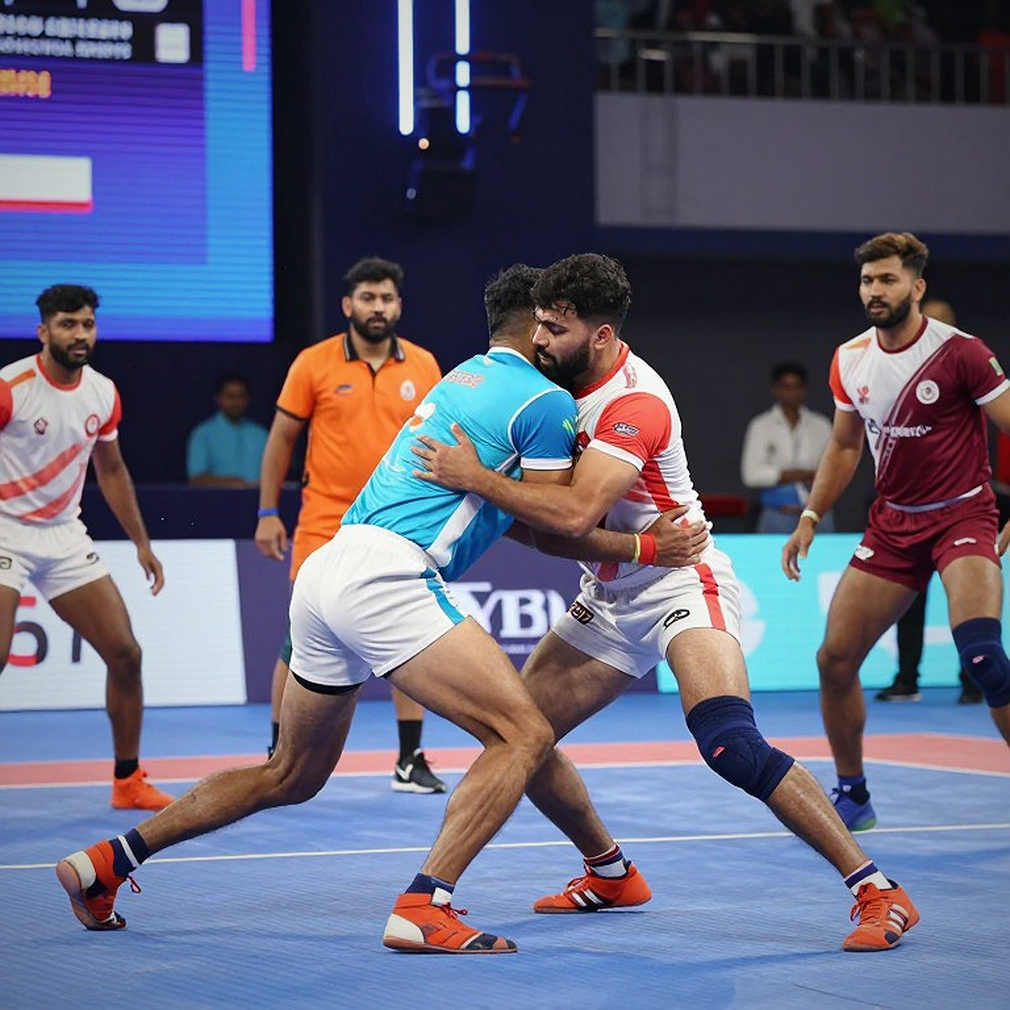
Japan is the name I would circle. Hosts, two wins, a settled system, 62-35 against Korea, and raiders who kept their heads when the tempo dropped. Names from Japan's raiding corners have been showing up on my Rising Star Index for two years. Anyone discovering them now is arriving late.
Then there is the market, and the auction window that follows every Asian Games. Broadcasters are already writing down losses on rights they bought with television logic, and kabaddi franchises are about to repeat the mistake. A medal is not a fit. Thailand's third place is a pile of wins, but their raid efficiency has to be re-read inside a different system. Meanwhile Bangladesh go home without a medal, and inside that squad are names whose raid success rates under pressure would not look out of place in the final four. They will enter the auction cheaper than they should. That price gap is the biggest market inefficiency this tournament has produced.
I thought Casemiro was the trap, until I saw my own certainty in the mirror. I have to hold the same mirror here. Four matches is a small sample, and one injury to a single raider can rewrite a group. Iran's 83-27 is terrifying, but it is also one afternoon. And maybe the tiebreaker is the most transparent tool available when teams do not face identical opponents — my objection could be the weaker argument.
Maybe Bangladesh genuinely were not good enough. Headlines have a way of shaping that verdict; the tournament gave us a score to argue about, not a conclusion.
When the stands went quiet, I heard the game. The tiebreaker was that quiet stand — nobody watched it happen, and it decided everything.
Looking forward to September 26, my testable prediction is simple. The semi-finals will be decided by raid efficiency in the middle eight minutes of each half, not by reputation. And at least one uncapped defender from Japan or Nepal will enter this season's auction at a price nobody in Dhaka predicted two weeks ago. Read the strategy, not the table; the table is only the receipt.